Driving digital transformation in Edo State through design thinking
Overview
Bringing design thinking into government
With one of Nigeria’s youngest populations and over 70% internet penetration, Edo State had strong digital potential. Real change in governance demands a shift in how public services are designed, delivered and experienced.
The DigiLink project was launched to embed user-centred design into the heart of government operations, transforming how problems are approached and how citizens are served.
My role
My role as a service design consultant
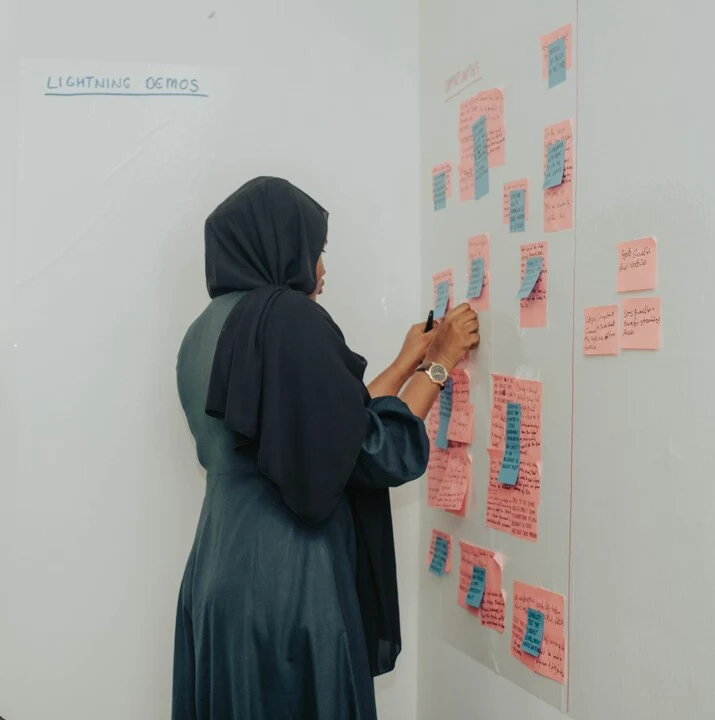
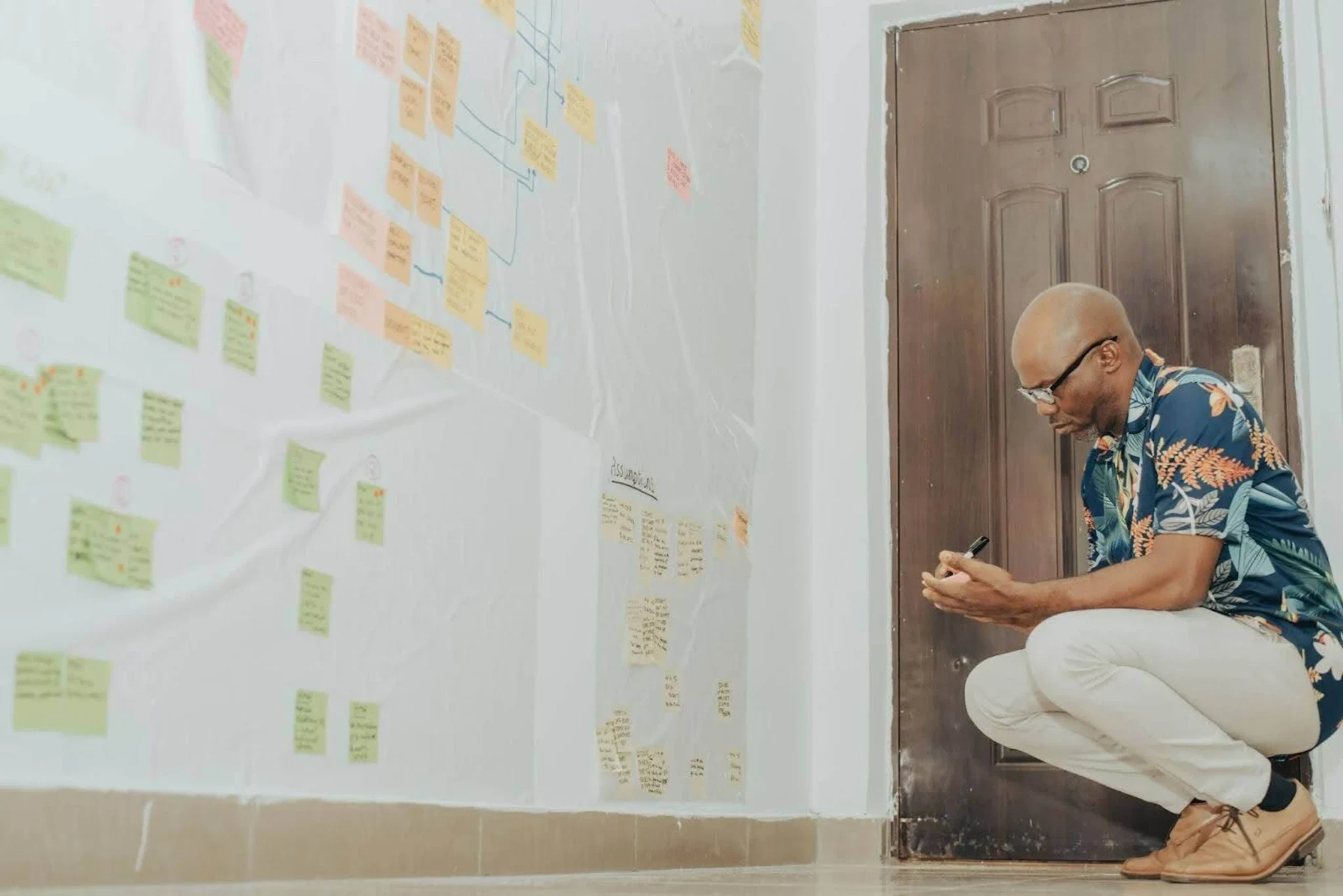
I worked with a multidisciplinary team to integrate design thinking into public sector workflows. I facilitated collaborative design sprints with civil servants across various agencies, led field research on critical state programmes, and co-developed the Edo State Design Sprint Playbook. The playbook is a practical guide that helps civil servants sustain design-led problem-solving long after our engagement.
Challenge
Getting stakeholder buy-in
Public services in Edo State were often designed and implemented from the top down, leading to inefficiencies, low adoption and fragmented citizen experiences. Many digital initiatives failed to resonate because they weren’t built with the end user in mind.
At the same time, there was deep scepticism toward new methods like design thinking. Most civil servants had never taken part in a design sprint, and some saw it as “too techie” or irrelevant to their work. Getting buy-in meant reintroducing design as a practical tool for solving real, everyday problems.
Approach
Reframing design in government
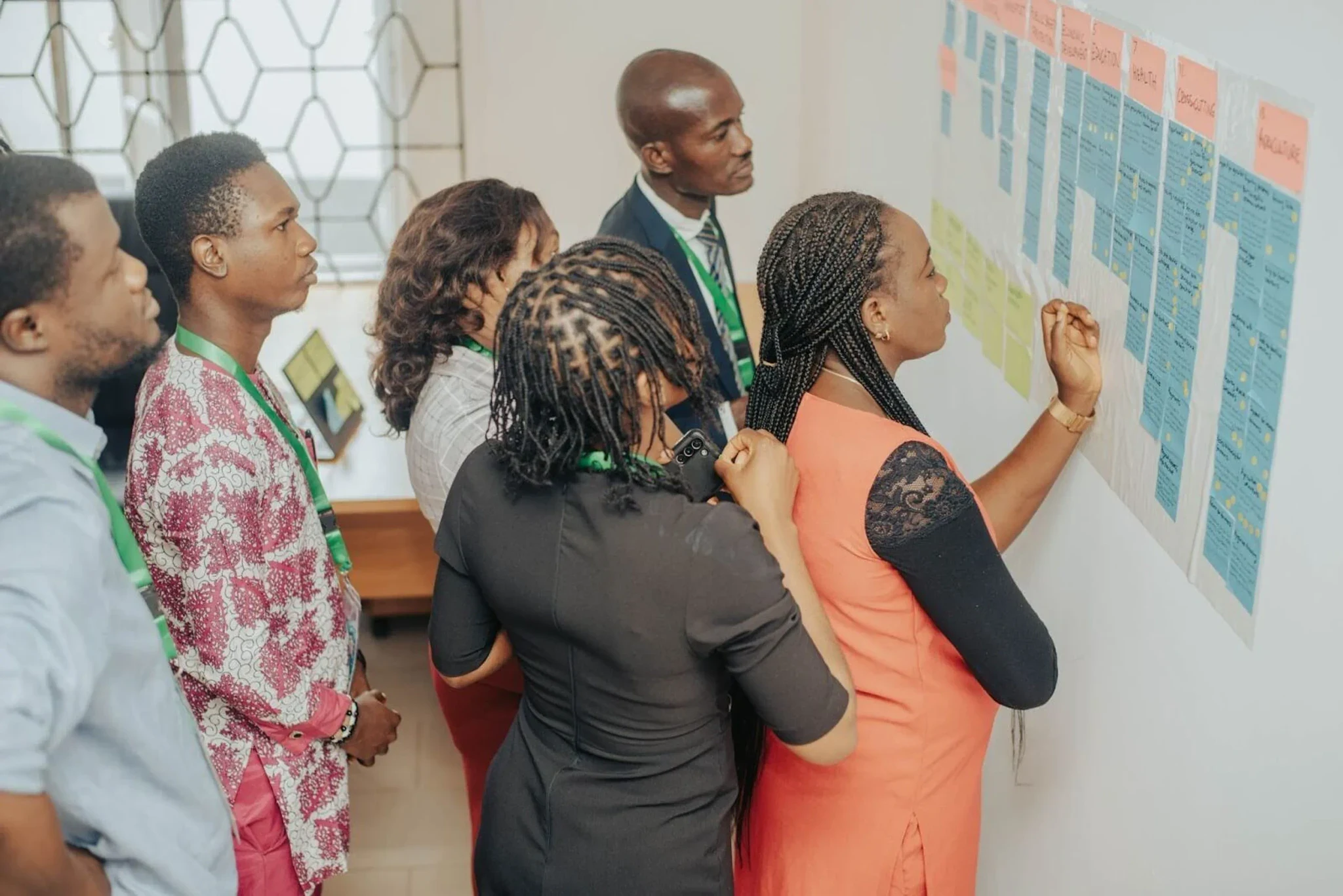
Our first sprint, especially Day 1, became a powerful turning point. Every detail, from the way sessions were facilitated to the co-creation exercises, was crafted to build confidence, foster collaboration and show how this approach could enhance existing workflows.
We began with team bonding exercises that helped break silos, then moved into collaborative problem-definition workshops. One highlight was a playful naming game where participants chose titles like “Chief Pixel Pusher” and “Idea Activator”. These lighthearted moments sparked energy and made the process feel approachable.
By Day 2, mindsets had shifted. Civil servants who once viewed design as “extra” now saw it as essential. They moved from passive participants to active problem solvers.

Edo Residency ID
A user-centred rollout of a state-wide resident identity system
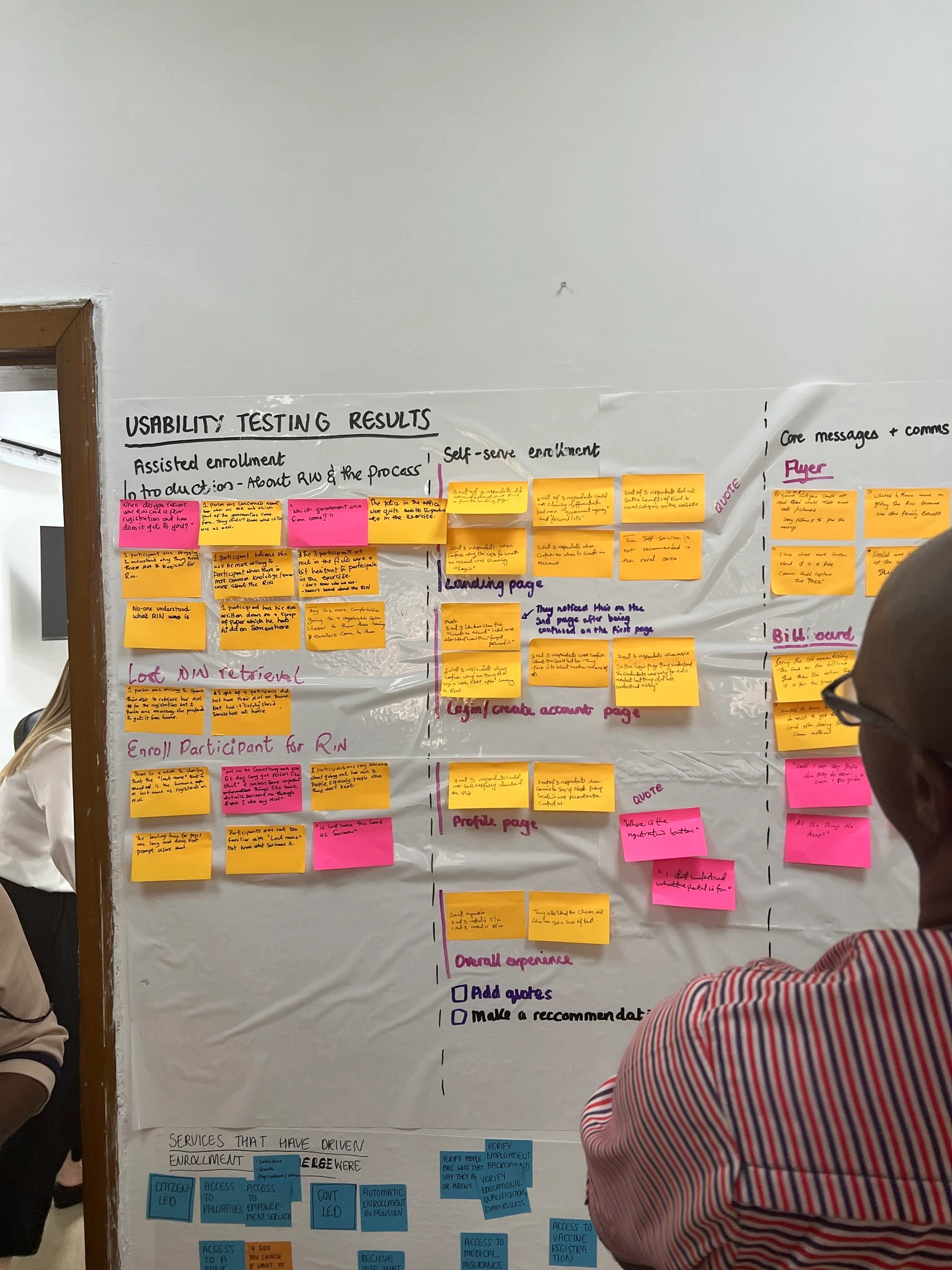
One of the most impactful applications of our approach was the Edo Residency ID programme. I co-led the user research effort alongside civil servants, running field interviews and usability tests with parents, traders, students and public workers.
Their feedback shaped the product at every level. We rewrote the onboarding flow to match how people naturally moved through registration, and simplified the language for every literacy level. Many residents didn’t understand why the ID mattered, so we reworked the value proposition to show its everyday benefits.
Result
A tangible culture shift across government teams
- 100+
- Civil servants equipped with practical design skills
- 20+
- Internal Digital Champions trained to lead sprints
- 1,000+
- Sign-ups in the Edo Residency ID pilot
This project proved that when design is truly collaborative, government innovation becomes inevitable.